
Peptides for Body Recomposition: The Proven 2026 Research Guide
The primary challenge in 2026 metabolic science is no longer just weight loss—it is body recomposition.
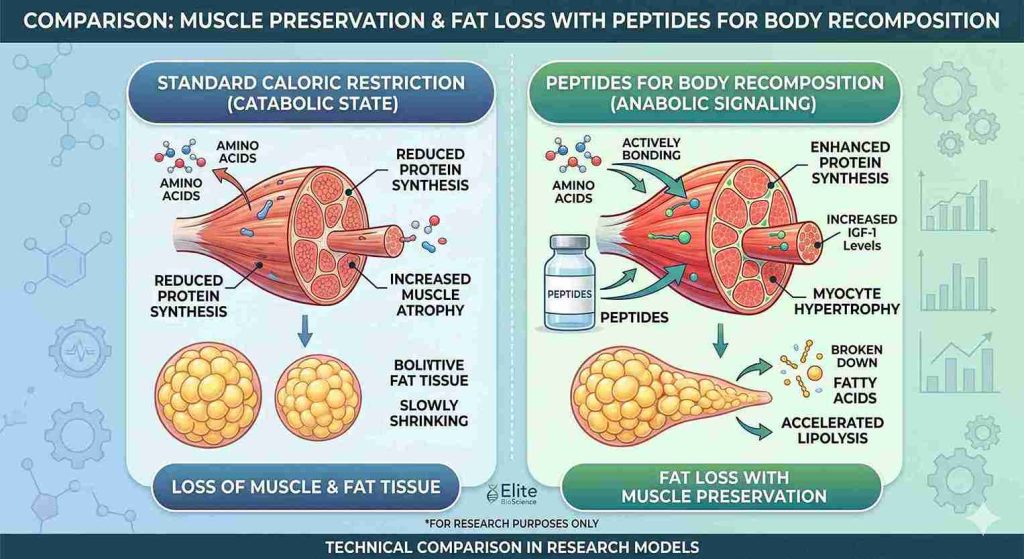
In the current research landscape, Peptides for Body Recomposition have become the gold standard for studies aimed at balancing rapid fat reduction with lean tissue preservation. Clinical data from 2025-2026 suggests that standard caloric restriction often leads to significant muscle atrophy; however, advanced peptide protocols are showing promise in reversing this catabolic trend.
Growth Hormone Secretagogues: Why Researchers Buy CJC-1295 Ipamorelin UK
To understand how to maintain muscle during a deficit, we must look at growth hormone secretagogues. When labs buy CJC-1295 Ipamorelin UK, they are investigating a dual-pathway approach to natural growth hormone (GH) stimulation.
CJC-1295 acts as a GHRH (Growth Hormone Releasing Hormone) analog, providing a steady elevation in baseline GH levels. Ipamorelin, a ghrelin mimetic, triggers sharp, specific GH pulses. Together, they create a 3-5 fold increase in GH release compared to single-peptide protocols, which is critical for stimulating IGF-1 production—the primary driver of muscle repair and nitrogen retention.
The Power of Retatrutide for Muscle Retention
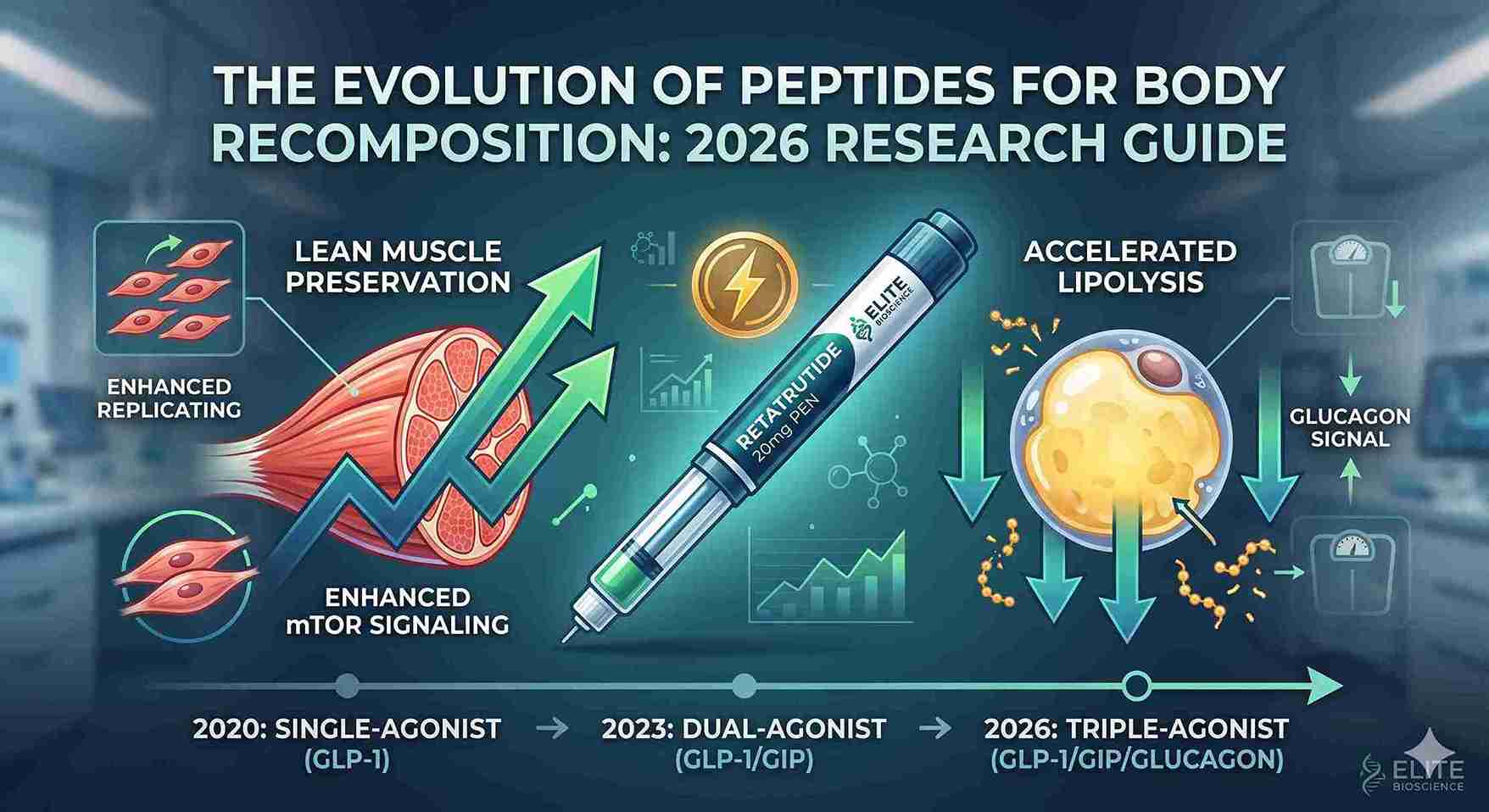
As we move deeper into 2026, Retatrutide for muscle retention has emerged as a key area of study. Retatrutide is a “triple agonist,” targeting GLP-1, GIP, and Glucagon receptors.
In Phase 2 trials, Retatrutide weight loss results showed an average reduction of 24.2% over 48 weeks. However, its true value in metabolic research stacks 2026 lies in the glucagon receptor activation, which may prevent the metabolic slowdown often seen with dual-agonists alone, helping researchers study fat loss while keeping muscle-wasting “starvation” signals at bay.
Technical Specification for Peptides for Body Recomposition
For a comprehensive study, researchers often utilize a “Triple-Pillar Stack.” This ensures that every metabolic angle is covered:
| Peptide Category | Primary Function |
|---|---|
| Triple Agonist (Retatrutide) | Maximum adipose mobilization & energy expenditure. |
| GHRH/GHRP (CJC/Ipam) | Upregulation of IGF-1 for lean tissue preservation. |
| Repair Factor (BPC-157) | Angiogenesis and ligamentous tissue structural repair. |
What’s Next for 2027: The Rise of Smart Delivery Systems
As we look toward 2027, the focus of Peptides for Body Recomposition is shifting from simple injection protocols to integrated biological signaling systems. The “first-generation” approach relied on single-peptide molecules, but the future lies in Peptide Drug Conjugates (PDCs) and smart delivery platforms.
Researchers are currently investigating “Targeted Peptides” that only activate when they reach specific tissue receptors, such as skeletal muscle or visceral fat. This innovation aims to maximize metabolic research stacks while minimizing systemic exposure. These advancements are expected to solve historical challenges like poor bioavailability and rapid enzymatic degradation, ensuring that the peptide remains biologically active until it reaches its intended destination.
MDPs and the Cellular Energy Revolution
Beyond the current popularity of GLP-1 and GH secretagogues, a new category is emerging: Mitochondria-Derived Peptides (MDPs) like MOTS-c and Humanin. These micropeptides are encoded directly in the mitochondrial genome and act as critical regulators of cellular stress and energy bioenergetics.
In body recomposition research, MDPs are being studied for their “exercise mimetic” properties. Specifically, MOTS-c has shown the ability to enhance glucose regulation and insulin sensitivity directly within skeletal muscle by activating the AMPK pathway. For the 2027 researcher, combining these mitochondrial “rejuvenators” with triple-agonists like Retatrutide represents the next frontier in tackling age-related metabolic decline and enhancing overall healthspan.
The Verdict on 2026 Metabolic Science
The science of Peptides for Body Recomposition has moved beyond simple weight loss. It is now a high-precision field focused on maintaining human performance during metabolic shifts. For those looking to study these interactions, sourcing high-purity (≥99%) materials is essential for valid data.
To see the latest in pre-filled technology, explore our Elite BioScience Retatrutide 20mg Pen for your next study. For deeper clinical understanding, we recommend reviewing the latest trial registries on ClinicalTrials.gov to stay informed on emerging data.
Products by Category
-
NAD+ 1,000mg Injection Pen – Energy + Longevity – Reviva Research
Original price was: £200.00.£170.00Current price is: £170.00. -
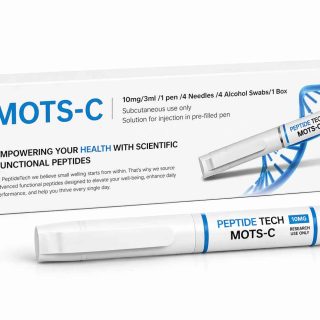
Peptide Tech MOTS-c 10mg Pen
Original price was: £110.00.£70.00Current price is: £70.00. -
Reviva+ CJC (no dac) + Ipamorelin 10mg Pre-Mixed Injection Pen
£70.00 -
Tesamorelin 10mg/3ml Pre-Filled Injection Pen – PeptideTech
Original price was: £110.00.£80.00Current price is: £80.00.


Popular
-
 Tesamorelin 10mg/3ml Pre-Filled Injection Pen – PeptideTech
Original price was: £110.00.£80.00Current price is: £80.00.
Tesamorelin 10mg/3ml Pre-Filled Injection Pen – PeptideTech
Original price was: £110.00.£80.00Current price is: £80.00.
-
 Acretin Tretinoin Cream – Professional Acne & Anti-Ageing Treatment (0.025% & 0.05%)
Price range: £20.00 through £25.00
Acretin Tretinoin Cream – Professional Acne & Anti-Ageing Treatment (0.025% & 0.05%)
Price range: £20.00 through £25.00
-
 PRO-X Bio-Sciences TanPro (Melanotan 2 10mg Pen)
Price range: £60.00 through £480.00
PRO-X Bio-Sciences TanPro (Melanotan 2 10mg Pen)
Price range: £60.00 through £480.00
-
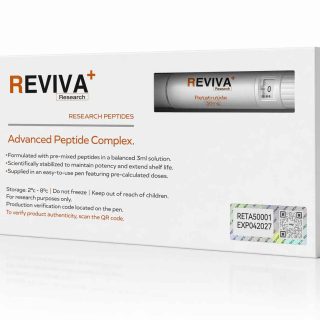 Reviva Research Retatrutide 50mg Pen
Original price was: £225.00.£180.00Current price is: £180.00.
Reviva Research Retatrutide 50mg Pen
Original price was: £225.00.£180.00Current price is: £180.00.
-
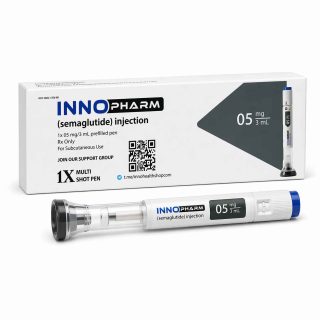 Inno Pharm Semaglutide 5mg Pen
Original price was: £110.00.£70.00Current price is: £70.00.
Inno Pharm Semaglutide 5mg Pen
Original price was: £110.00.£70.00Current price is: £70.00.


Leave a Reply