
Elite BioScience Buyer Guide
7 Essential Research Product Quality Checks for Safer Buying
Research product quality matters before anything else. Before ordering from any supplier, buyers should look at the label, product clarity, COAs, batch information, storage standards, website trust signals and common red flags. A professional supplier should make the buying decision feel clearer, not more confusing.
The research product market can feel overwhelming. Some websites look professional, some look rushed, some give very little information, and some rely on big claims instead of clear product details. That is why checking research product quality is one of the most important steps before buying.
This guide is designed to help buyers understand what to look for before placing an order. It is not about chasing the cheapest price or believing the loudest advert. It is about reading the product page properly, checking the label, looking for batch information, understanding COAs and choosing suppliers that take clarity seriously.
A good supplier should make the basics easy to find. Product name, strength, format, batch number, expiry information, storage notes, contact details and clear checkout information should not be hidden. If a buyer has to guess what they are ordering, that is already a warning sign.
Quick Answer: What Should You Check Before Buying?
- Product label: name, strength, format, batch and expiry details.
- COA or batch testing: quality documents where available.
- Product page clarity: clear description, format and product images.
- Storage notes: sensible handling and product care information.
- Supplier trust signals: secure checkout, contact details and active social proof.
- Professional presentation: consistent branding and clear product categories.
- Red flags: vague claims, poor labelling, unrealistic prices and no support.
Why Research Product Quality Matters
Research product quality is not just about the product itself. It is also about the supplier behind it. A supplier that takes quality seriously usually takes product pages, labels, customer support, storage information and buyer education seriously too.
Buyers often focus only on price. That is understandable, but it can also be a mistake. A cheap product is not good value if the label is unclear, the batch information is missing, the website gives no useful information, or the supplier cannot answer basic questions. In research products, clarity is part of quality.
The better question is not “what is the cheapest option?” The better question is:
Does this supplier give me enough information to feel confident about what I am buying?
Research Product Quality Checklist
Use this table as a simple checklist before ordering from any supplier. It helps separate professional product pages from vague or rushed ones.
1. Check the Product Label First
The label is one of the first signs of research product quality. A good label should not leave buyers guessing. It should clearly show what the product is, the strength, the format, the batch details and any important product notes.
This is especially important when comparing similar products. If two products look alike but the label is unclear, it becomes harder to know what is being purchased. A professional supplier should make the difference obvious.

What a clear label should show
- Product name: the product should be clearly identified.
- Strength: the amount should be easy to read.
- Format: pen, vial, capsule, powder or other format should be clear.
- Batch number: useful for tracking and quality control.
- Expiry or date information: buyers should not have to guess.
- Storage notes: if relevant, these should be visible and easy to follow.
If a product label looks rushed, incomplete or inconsistent, that should raise questions. Good research product quality starts with clear information.
2. Look for COAs and Batch Testing
A COA, or Certificate of Analysis, is one of the most common quality documents buyers look for. It can show details such as batch reference, testing date, identity checks, purity information and whether a product meets certain specifications.
Not every supplier presents documents in the same way, and buyers should always read them carefully. A COA should match the product and batch being discussed. If a supplier talks about quality but gives no useful details, the buyer is left relying only on trust.
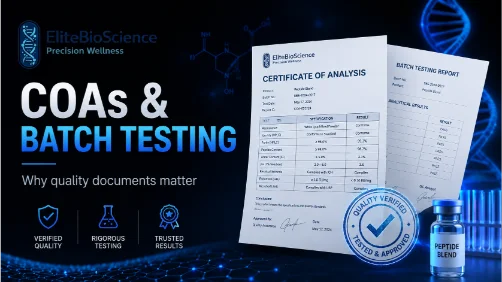
What to check on a COA
- Product name
- Batch number
- Testing date
- Purity or identity information where applicable
- Lab or testing reference
- Result summary
- Whether the document matches the product being sold
A COA should support clarity. If the document is blurry, unrelated, outdated, missing batch information or impossible to match to the product, it does not give much confidence.
Simple COA Rule
A quality document should answer questions, not create more confusion. If the COA cannot be linked back to the product or batch, buyers should be cautious.
3. Read the Product Page Properly
A product page should do more than show a price and an image. It should explain what the product is, what format it comes in, which category it belongs to and what the buyer needs to know before ordering.
A professional product page is part of research product quality because it shows care. Suppliers who take time to create clear product pages are usually more serious about the buying experience.
A strong product page should include:
- Clear product title
- Good product image
- Strength and format
- Short but useful product description
- Category placement
- Storage or handling notes where relevant
- Related product suggestions
- Contact or support options
The product page should not feel like guesswork. If the page is vague, copied, poorly written or missing key information, that is a weak signal.
4. Check Storage and Handling Standards
Storage and handling information is another important part of research product quality. Buyers should look for suppliers that understand product care and present storage notes clearly.
This does not mean every product has the same requirements. Different formats can have different expectations, so the key point is clarity. A supplier should provide sensible guidance and professional presentation.

Storage and handling trust signals
- Clear storage notes on the label or product page
- Professional packaging presentation
- Temperature awareness where relevant
- Consistent information across product pages
- Support available if buyers have questions
Poor handling information can make a supplier look careless. A serious supplier should care about how products are presented, described and delivered.
5. Watch Out for Unrealistic Pricing
Price matters, but it should not be the only deciding factor. Extremely cheap products can be tempting, especially when buyers are comparing several suppliers. But if a price looks too good to be true, it is worth asking why.
Low prices are not automatically bad, but they should be backed up by clear product information. If the product is cheap and the page has poor labelling, no COA, no batch details and no supplier support, that is not a strong sign of research product quality.
Price red flags
- Prices far below the rest of the market with no explanation
- No product details beyond a name and price
- No batch or quality information
- No clear contact or support route
- No brand presence outside the website
Buyers do not always need the most expensive supplier. They need a supplier that gives enough information to make the purchase feel clear and professional.
6. Check Supplier Trust Signals
Supplier trust is one of the biggest buying factors. A website may have good-looking products, but buyers should also look at the wider brand. Does the supplier have contact details? Are social profiles active? Is the checkout secure? Is there educational content? Does the brand look consistent?
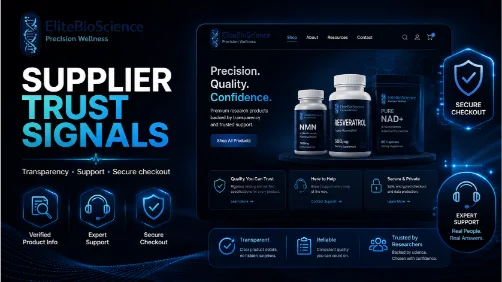
Good supplier trust signals
- Secure checkout
- Clear product categories
- Useful product education
- Active social media pages
- Visible contact or support information
- Consistent branding
- Clear internal links to related products and guides
Buyers should not have to feel like they are ordering from a mystery website. A supplier that wants long-term trust should be visible, consistent and easy to contact.
7. Avoid Big Claims and Vague Promises
One of the biggest red flags is overhyped wording. If a supplier relies on extreme claims, miracle promises or aggressive sales language, buyers should be careful. Strong research product quality is usually supported by clarity, not hype.
Serious suppliers should focus on accurate product information, clear labels, quality documents, education and support. They should not need to make unrealistic promises.
Common red flags to avoid
- Miracle claims
- No batch details
- No COA or quality explanation
- Unclear product images
- No storage or handling notes
- No contact details
- Poor spelling and rushed product pages
- Inconsistent product naming
- Prices that look unrealistic compared with the market
Buyer Checklist Before Ordering
Before placing an order, use this quick buyer checklist. It helps keep the decision practical rather than emotional.
Where Elite BioScience Fits In
Elite BioScience focuses on clear product presentation, research-led education and practical buyer guidance. The aim is to make product information easier to understand before purchase, not to confuse buyers with vague pages or exaggerated claims.
Our product pages are designed to help buyers compare research products, understand the format and move through the site with more confidence.
Related Elite BioScience Products
Related Guides to Read Next
If you are comparing research products, these related education topics are also worth reading:
- Retatrutide Diet: protein, carbs and meal plan examples.
- Supplements With Peptides: protein, creatine, electrolytes and recovery support.
- Beginner Research Peptide Terms: COA, batch, purity, storage and format explained.
- Peptide Pens vs Vials: how different product formats are presented.
Final Thoughts: Research Product Quality Should Be Easy to Check
Research product quality should not feel like a guessing game. A professional supplier should make the important details easy to find. Labels should be clear. Product pages should be useful. COAs and batch information should be easy to understand where available. Storage notes should be sensible. Support should be visible.
Buyers should be cautious with suppliers that rely only on low prices, vague descriptions or big claims. The better approach is to choose a supplier that gives clear information and treats product education as part of the buying process.
Before ordering, check the label, read the product page, look for quality documents, review supplier trust signals and avoid anything that feels rushed or unclear. Good buying decisions start with better information.
Follow Elite BioScience
For more research-led product education, quality guides and product updates, follow Elite BioScience on social media.


Popular
-
 Tesamorelin 10mg/3ml Pre-Filled Injection Pen – PeptideTech
Original price was: £110.00.£80.00Current price is: £80.00.
Tesamorelin 10mg/3ml Pre-Filled Injection Pen – PeptideTech
Original price was: £110.00.£80.00Current price is: £80.00.
-
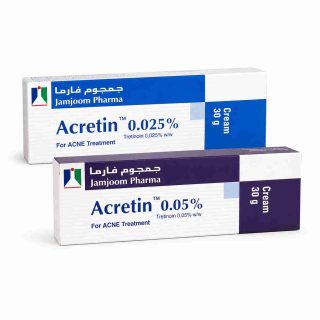 Acretin Tretinoin Cream – Professional Acne & Anti-Ageing Treatment (0.025% & 0.05%)
Price range: £20.00 through £25.00
Acretin Tretinoin Cream – Professional Acne & Anti-Ageing Treatment (0.025% & 0.05%)
Price range: £20.00 through £25.00
-
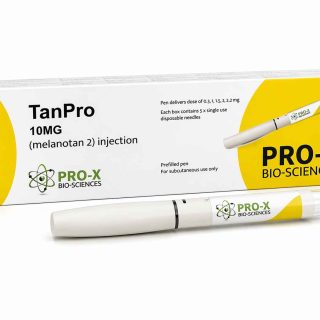 PRO-X Bio-Sciences TanPro (Melanotan 2 10mg Pen)
Price range: £60.00 through £480.00
PRO-X Bio-Sciences TanPro (Melanotan 2 10mg Pen)
Price range: £60.00 through £480.00
-
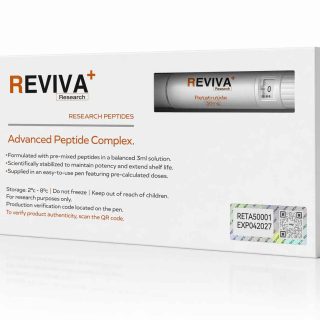 Reviva Research Retatrutide 50mg Pen
Original price was: £225.00.£180.00Current price is: £180.00.
Reviva Research Retatrutide 50mg Pen
Original price was: £225.00.£180.00Current price is: £180.00.
-
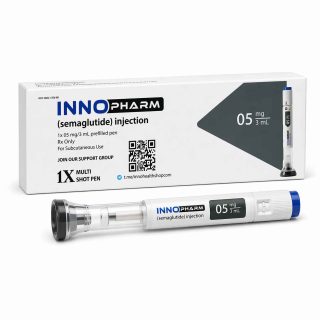 Inno Pharm Semaglutide 5mg Pen
Original price was: £110.00.£70.00Current price is: £70.00.
Inno Pharm Semaglutide 5mg Pen
Original price was: £110.00.£70.00Current price is: £70.00.



Leave a Reply